English
  Español
Hats vs. Flats: Why You Need Two Different Digitizing Files
Introduction: The Expensive Cap Blunder
Every commercial embroiderer in the United States has experienced this nightmare: you have a high-paying client who wants their corporate logo embroidered on flat polo shirts and matching custom snapbacks (like a Richardson 112 or a classic Yupoong Flexfit). You hoop the flats, load the file, and they stitch out beautifully. Then, you swap the machine to a curved cap frame, load the *exact same* logo file, and push start. Within minutes, you hear a loud pop, the thread breaks, the cap fabric shifts, and the logo outlines are completely misaligned. You have just ruined a premium $15 cap.
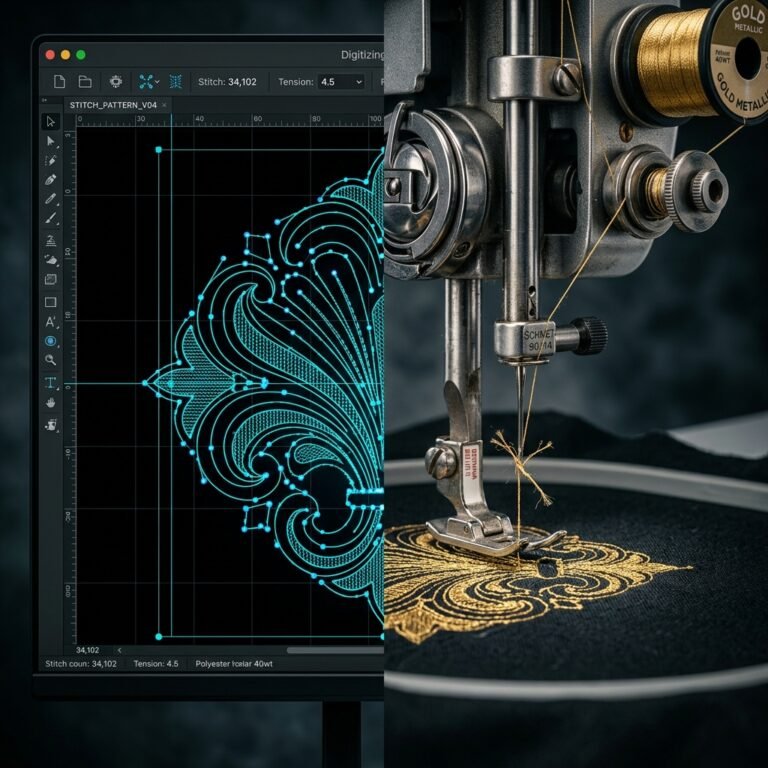
The mistake? Attempting to use a flat embroidery file on a curved cap. Cap embroidery is a three-dimensional physical challenge. To achieve perfect results, you must use embroidery designs for hats that are digitized from scratch specifically for cap frames. Let’s dive deep into the mechanical reasons why hats and flats require completely separate digitizing files.
1. Curved vs. Flat Geometry: The Mechanical Challenge
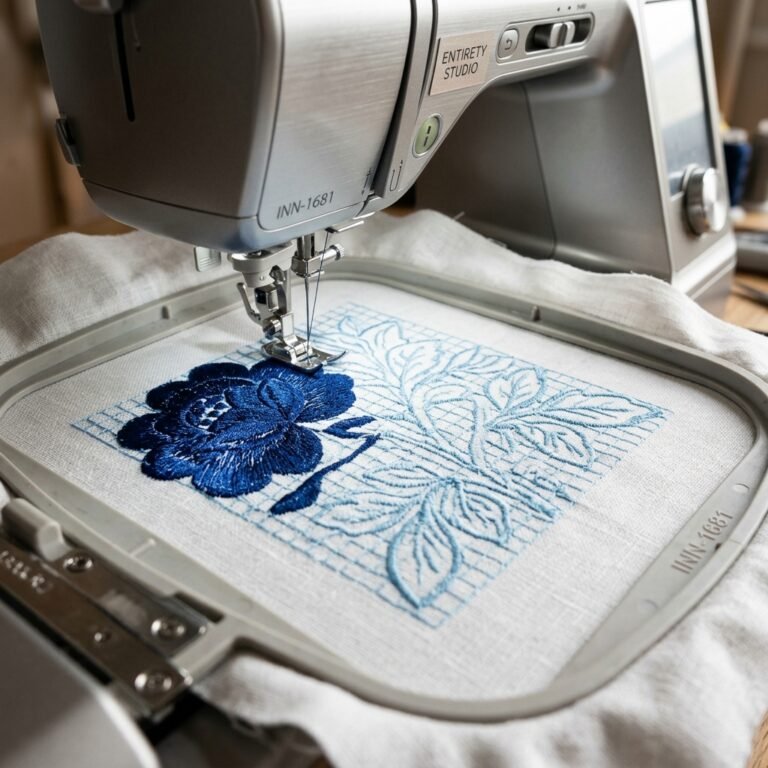
When you hoop a flat garment (like a jacket back, t-shirt, or polo), the fabric is held taut in a two-dimensional plane. The embroidery needle moves along the X and Y axes across a perfectly flat surface, allowing for predictable fabric behavior. The fabric can move in any direction with minimal distortion.
A cap frame, however, bends the fabric into a cylinder. The cap hoop rotates left and right around a curved driver while the needle bar moves vertically. This physical curvature introduces a severe push-and-pull effect. If you stitch a design from left to right on a curved cap, the rotational movement will push the excess fabric in front of the needle, creating a massive wrinkle (called a “flagging bubble”) by the time the needle reaches the right side. The outlines will miss their marks, and the design is ruined.

2. The Rule of Cap Digitizing: Center-Out & Bottom-Up
To conquer the push-and-pull effect on a cylinder, embroidery designs for hats must follow a strict, non-negotiable stitching sequence:
- Center-Out Pathing: The design must start stitching at the absolute center vertical axis of the cap panel and work its way outward to the left side, then return and work from the center outward to the right side. This pushes the fabric bulge symmetrically to the sides, preventing it from bunching up.
- Bottom-Up Pathing: Stitches must start at the bottom of the cap (closest to the stiff brim seam) and work their way up toward the crown. This anchors the cap firmly to the cap frame driver and pushes any loose fabric upward and away from the needle plate.
- Underlay Anchoring: Cap designs require a heavy, broad run-stitch underlay before the cover stitches are placed. This stabilizes the buckram fabric and binds it securely to the heavy cap stabilizer. Read more on how this works in our guide on understanding embroidery underlay stitches.
3. Sizing and Height Constraints on Caps
Another major difference between hats and flats is the physical design envelope. On flat garments, you are limited only by the size of your machine hoops. On hats, you are working within a very strict physical box. A standard front-panel cap logo should never exceed 2.25 inches (57mm) in height. If you program a logo at 2.5 inches or higher, the needle bar will crash into the metal band of the cap frame as it nears the top crown, breaking the needle, shredring the thread, and potentially throwing your machine out of timing.
For custom cap designs, especially those utilizing elevated techniques like 3D foam, you should review our ultimate guide to 3D puff embroidery. Achieving puff on a curved cap is the ultimate test of a digitizer’s skill.
Conclusion: Save Money by Using Separate Files
Do not compromise your brand or waste expensive hats trying to make a flat shirt file work on a curved cap. At ABDigitizing, we provide two distinct, optimized files when you order a flat/hat package. We ensure your flat file is digitized for soft draping on garments, while your hat file is built with professional center-out, bottom-up pathing, providing clean outlines, tight registration, and zero wrinkling on the machine.